
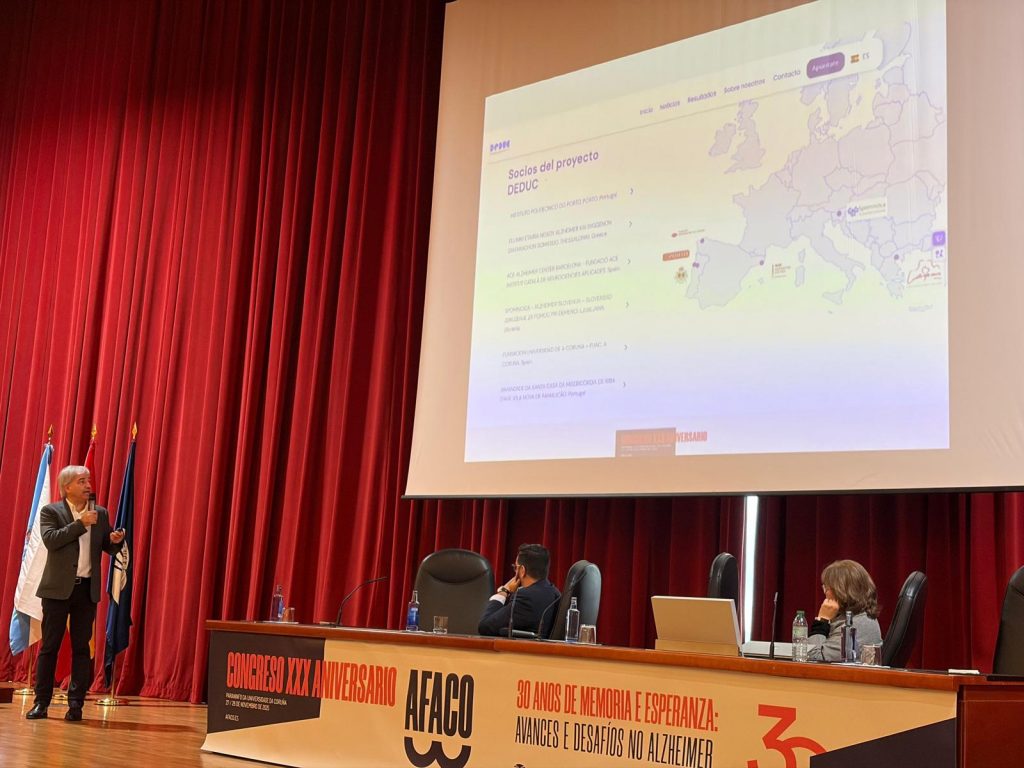
Technology and Virtual Reality to slow the progression of Alzheimer’s
- The Deputy Director of CITIC at the University of A Coruña, Javier Pereira, advocated for the importance of a multimodal prevention model during his participation in the events marking the 30th anniversary of the A Coruña Alzheimer’s Family Association (AFACO).
A Coruña, 03 December 2025.-The Deputy Director of CITIC at the University of A Coruña, Javier Pereira, emphasised the importance of a preventive approach to Alzheimer’s based on a multimodal framework combining cognitive stimulation, physical exercise, social and emotional interaction and, crucially, the use of technological tools and non-pharmacological therapies. This was the central message of his contribution to the round-table “Preventive Programmes – Non-pharmacological Therapies”, held as part of the celebrations for the 30th anniversary of the A Coruña Alzheimer’s Family Association (AFACO). Pereira highlighted that new technologies make it possible to “personalise, measure and fine-tune” interventions with a degree of precision that is difficult to achieve through traditional methods.
During his speech, he presented progress on immersive virtual reality developments designed to strengthen autonomy, cognitive stimulation and motor rehabilitation. Among the solutions showcased were simulations of daily living activities, hand-strength training tools, cognitive games, controlled-movement systems and virtual environments such as Huerto VR and Supermercado 4.0. These tools rely on adapted hardware and monitoring platforms that allow each intervention to be tailored to users’ real needs.
Participants in the round table agreed that prevention must begin before clear symptoms appear, anticipating deterioration and avoiding interventions that are limited to advanced stages of the disease. Pereira also underscored the relevance of movement monitoring, environmental sensing, non-invasive neuromodulation and digital support platforms for care staff as key elements of a modern preventive strategy. The technology developed is already in place across 18 centres in Galicia, where it is delivering positive results in motivation, engagement and the maintenance of functional abilities.
The event highlighted that combining non-pharmacological therapies with emerging technologies offers a promising route to delay or mitigate the progression of Alzheimer’s, provided there is a shared commitment from professionals, public authorities and society at large.
AFACO has been working since 1995 in A Coruña to provide comprehensive care for people with Alzheimer’s and their families, combining social, therapeutic and support services that promote quality of life and an active approach to prevention.