The CITIC of UDC leads a European project that drives the simulation of complex fluids to protect the environment and improve health conditions
- Eight institutions from Europe and America work coordinated from the CITIC to design precise models that Will be applied to phenomena such as lava Flow or the transport of drugs within tissues.
- The Project InNoPor develops new tools to understand how complex liquids flow through porous materials, facilitating the optimisation of energetic processes and the cleaning of contaminated spaces.
A Coruña, February 5th 2026
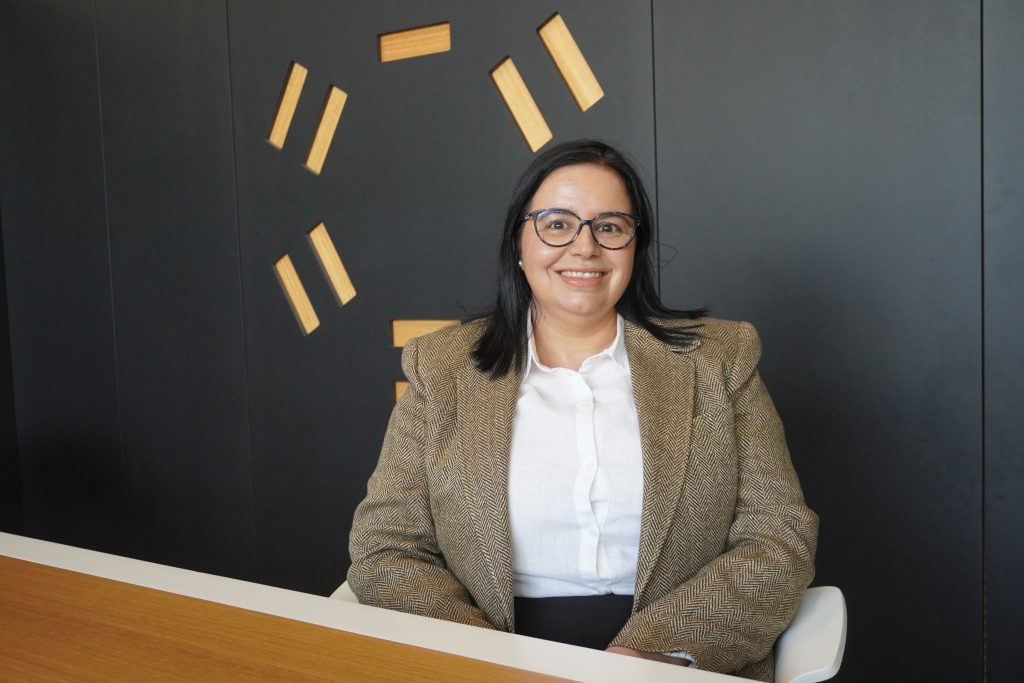
A new project, coordinated by María González Taboada, researcher at the CITIC of the UDC, centre part of the CIGUS Network of the Xunta de Galicia, looks to develop new numerical strategies to understand and predict how non-Newtonian fluids behave in porous materials, like rocks or biological tissues. This kind of fluids, which include from viscoelastic mixtures to fluids with properties that change over time, is difficult to study, but their analysis is fundamental for different scientific and industrial fields.
The advances that may come from the InNoPor Project, part of the Marie Skłodowska-Curie Actions (MSCA) program, will be key to optimise energy processes, improve techniques for environmental remedies -this is, the actions destined to clean and restore contaminated spaces to protect the healthcare and the environment- and anticipate natural phenomena such as volcanic ash dispersion or lava flow. Furthermore, the project will have an impact on biomedical applications, for example, in the efficiency of administering medication in complex tissues.
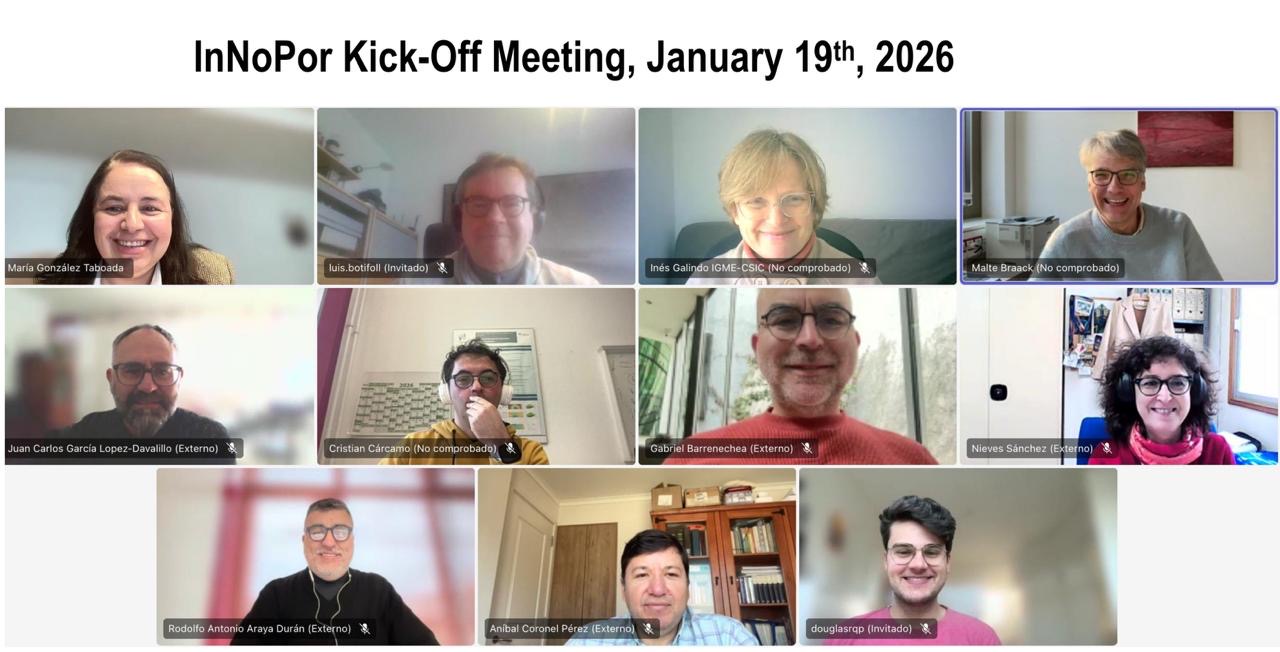
The international consortium, made up of eight institutions from Europe and America, will work side by side during the next few years to develop mathematical models and algorithms more precise and robust. An open-source software will be developed that will include said advances and will be validated with real data, such as the lava flows occurred in la Palma in 2021. At the same time, the project is considering studying phenomena that involve multiple phases and thermal effects, which would open the door to even more complex applications.
The entities that are part of this project are the University of Strathclyde (UK), RWTH Aachen (Germany) Kiel University (Germany), WIAS Berlin (Germany), IGME-CSIC (Spain), Universidad de Concepción (Chile) and Universidad del Bio-Bio (Chile).
About the CITIC
The CITIC is an investigation centre that boosts progress and excellency at R&D&I applied to ICT, created in 2008 by the Universidade da Coruña (UDC). The scientific activity is structured around four main areas of research: Artificial Intelligence, Data Science and Engineering; High-Performance Computing; and Smart Services and Networks, as well as a research area transversal to all others: Cybersecurity.
The CITIC is credited as a Centre of Excellence and a member of the CIGUS Network for the 2024-2027 period, which guarantees the quality and impact of its research. The endorsement, structure and improvement of the CITIC is cofinanced by the Xunta de Galicia and 60% by the European Union within the framework of the Operative Program FEDER Galicia 2021-2027, with the goal of promoting “a more intelligent Europe: An innovative and intelligent economic transformation” (ED431G 2023/01).