CITIC welcomes Galician clusters through UDC Conecta
- Today, representatives of the main Galician clusters visited the CITIC at the UDC under the framework of UDC Conecta, an initiative organised by the Office for Knowledge Transfer (OTC).
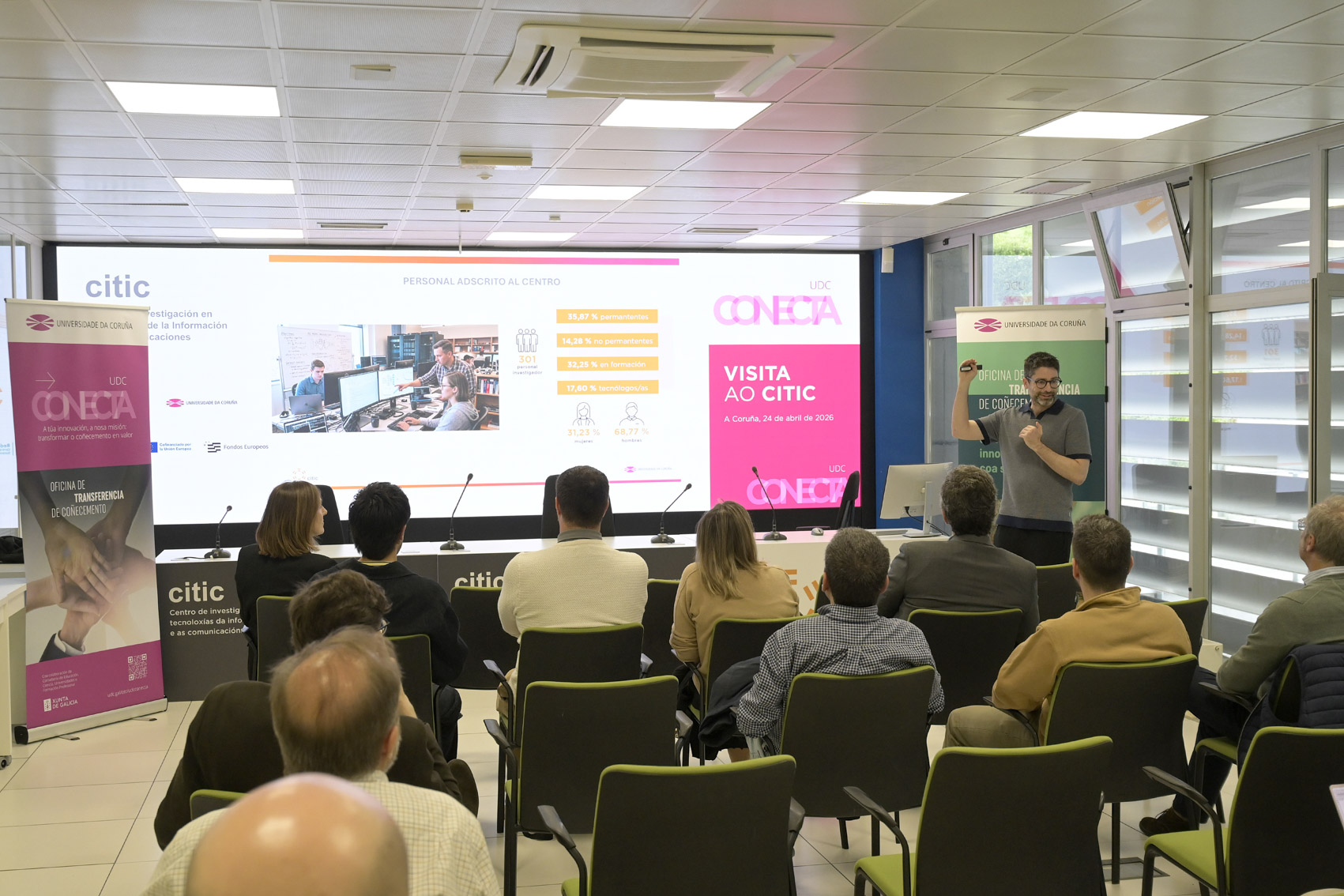
- Javier Garrido, Head of Transfer and Innovation at CITIC, presented the centre’s capabilities.
A Coruña, April 24th, 2026
The Centre for Research in Information and Communication Technologies (CITIC) at the Universidade da Coruña today welcomed representatives from Galician clusters as part of the UDC Conecta initiative, promoted by the Knowledge Transfer Office (OTC). The aim of this programme is to explore and promote new avenues of collaboration, as well as to bring the scientific and technological capabilities of the university’s various research centres closer to the companies within the clusters.
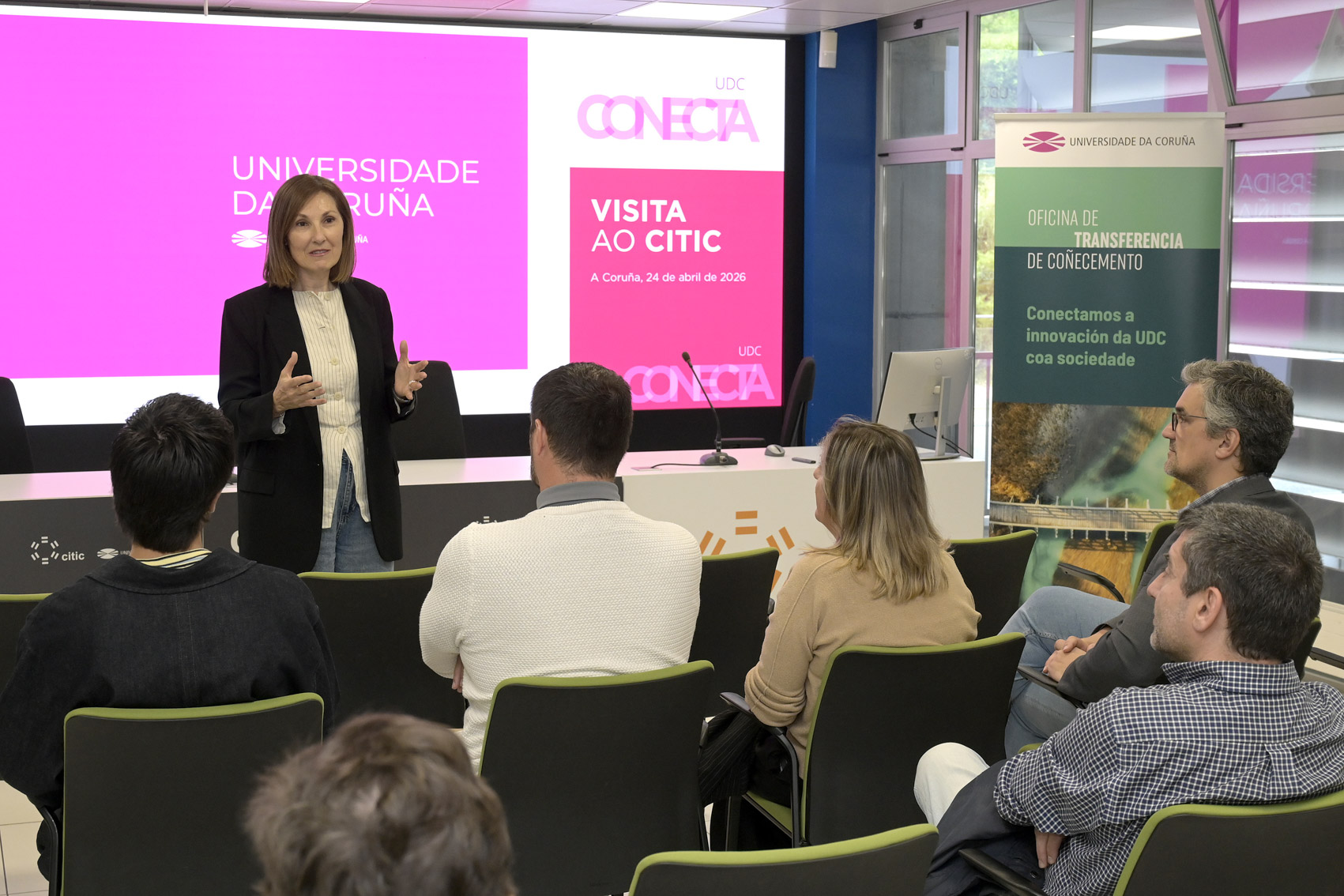
Maribel Docampo, director of the OTC, presented the office’s main functions and the objectives of the UDC Conecta programme. For his part, Javier Garrido Barral, head of Transfer and Innovation at CITIC, outlined the centre’s key capabilities in the areas of research and knowledge transfer. The CITIC maintains partnerships with public administrations, companies and third sector organisations, acting as a bridge between university research and the socio-economic landscape. Currently, the CITIC has more than 50 active projects in collaboration with companies in sectors such as biotechnology, aerospace, Industry 4.0, healthcare and naval.
Some of the centre’s projects were presented, such as PILLAR-Robots, focused on the design of autonomous robots integrated with continuous learning, intrinsic motivation and a defined purpose; or SPACIOUS, an initiative aimed at developing a scientific cloud platform for the exploitation of large volumes of data from European Space Agency space missions, such as Gaia and Euclid.
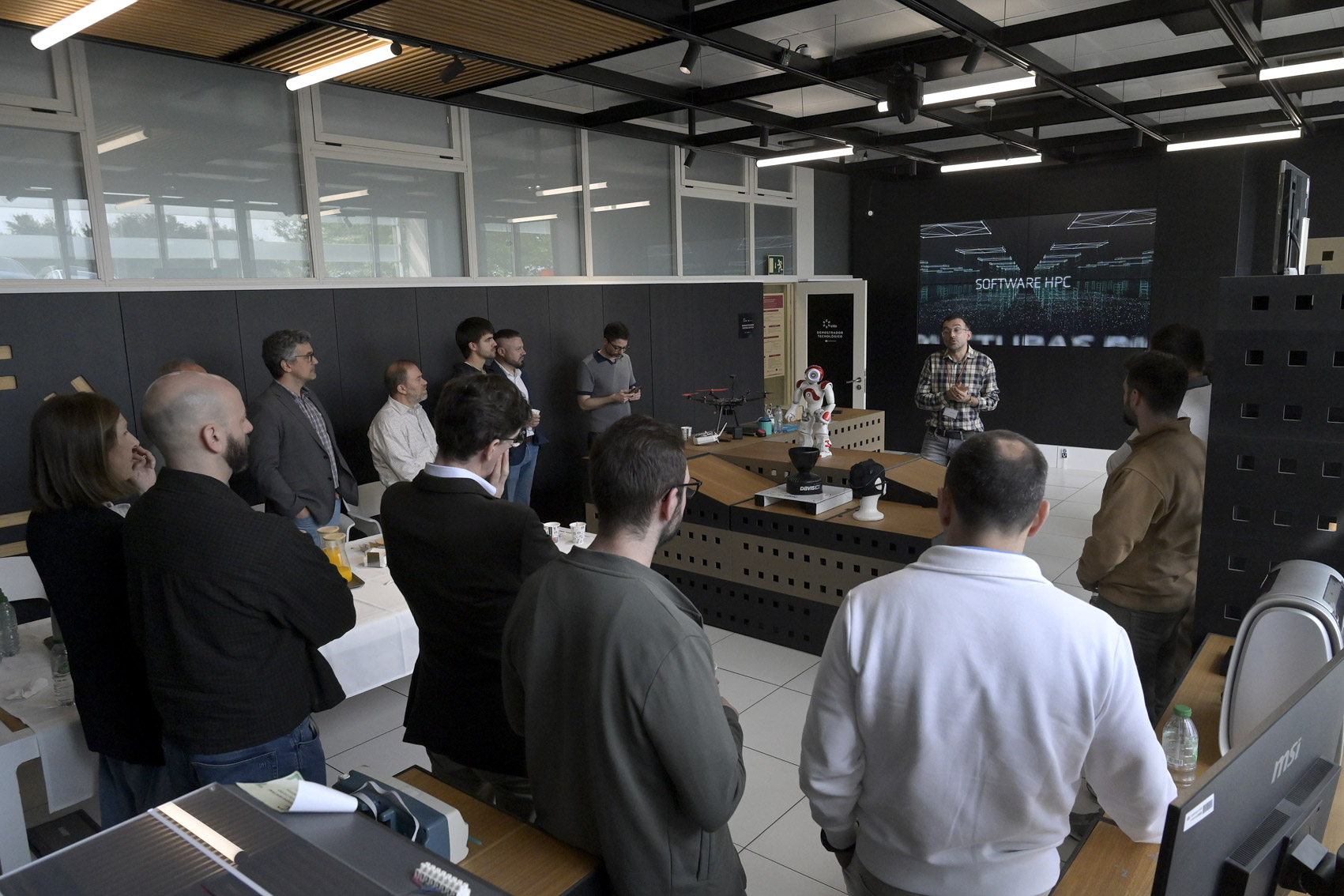
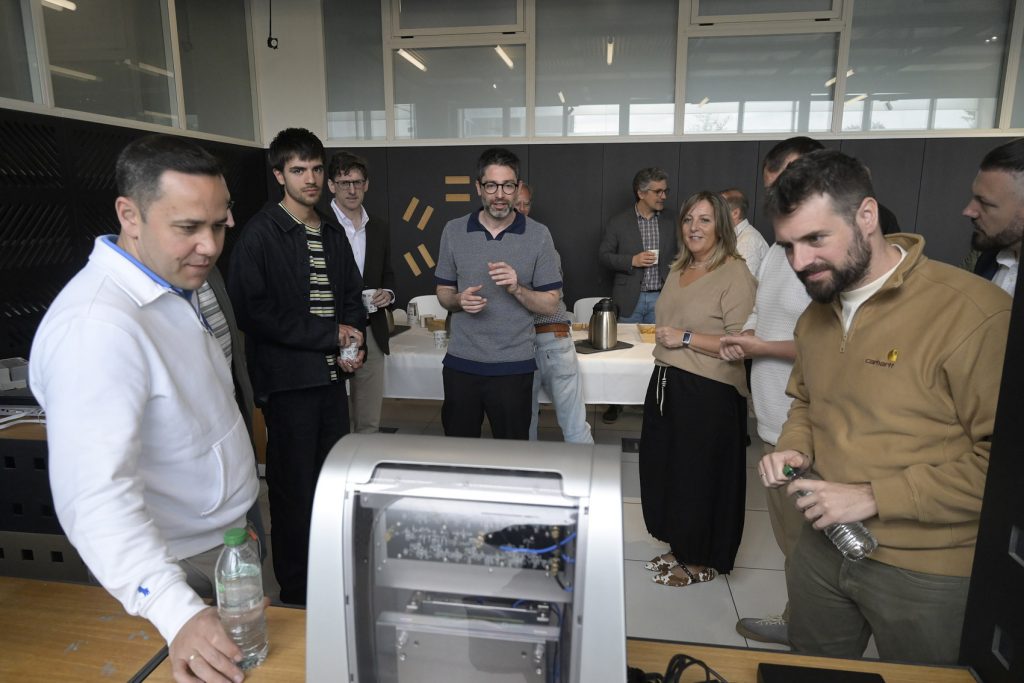
The day continued with a tour of the ICT centre’s facilities, during which attendees were able to see first-hand various examples of applied research. The Technology Demonstrator showcased, amongst other things, an artificial intelligence-based system for detecting polyps, as well as the FlatCITY app, which uses Internet of Things (IoT) technology to identify the barriers people with mobility issues face in smart cities. Among its functions, the ability to locate adapted parking spaces near the user in the city of A Coruña.
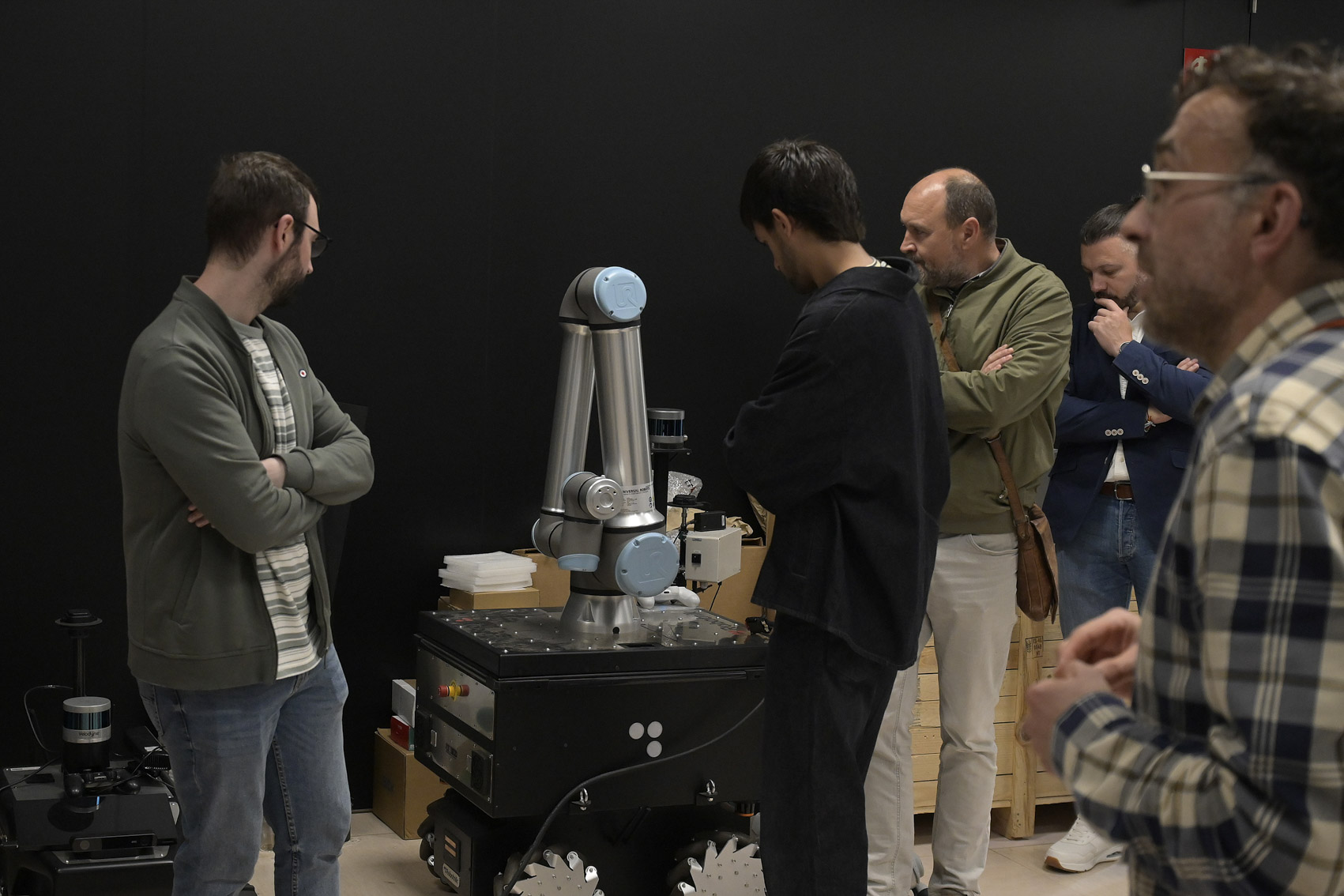
In addition, the group visited the Robotics Room, the Data Processing Centre (DPC) and the Virtual Reality Room, where they were able to try out a virtual supermarket designed to help people with disabilities regain their independence through a simulated shopping experience.