From users to thinkers: this is how AI is taught in secondary schools in A Coruña
- The generative AI literacy programme launched by the Provincial Council of A Coruña and the UDC’s CITIC has concluded its first run after reaching 20 secondary schools across the province.
- Francisco Bellas, researcher at the UDC’s CITIC and head of the programme, states that the objective of training students in the responsible use of generative AI has been achieved, with a particular focus on ethics and legality.
- The Provincial Council considers it essential to continue the programme in order to promote critical, responsible AI training that is tailored to the education system.
A Coruña, May 6th, 2026
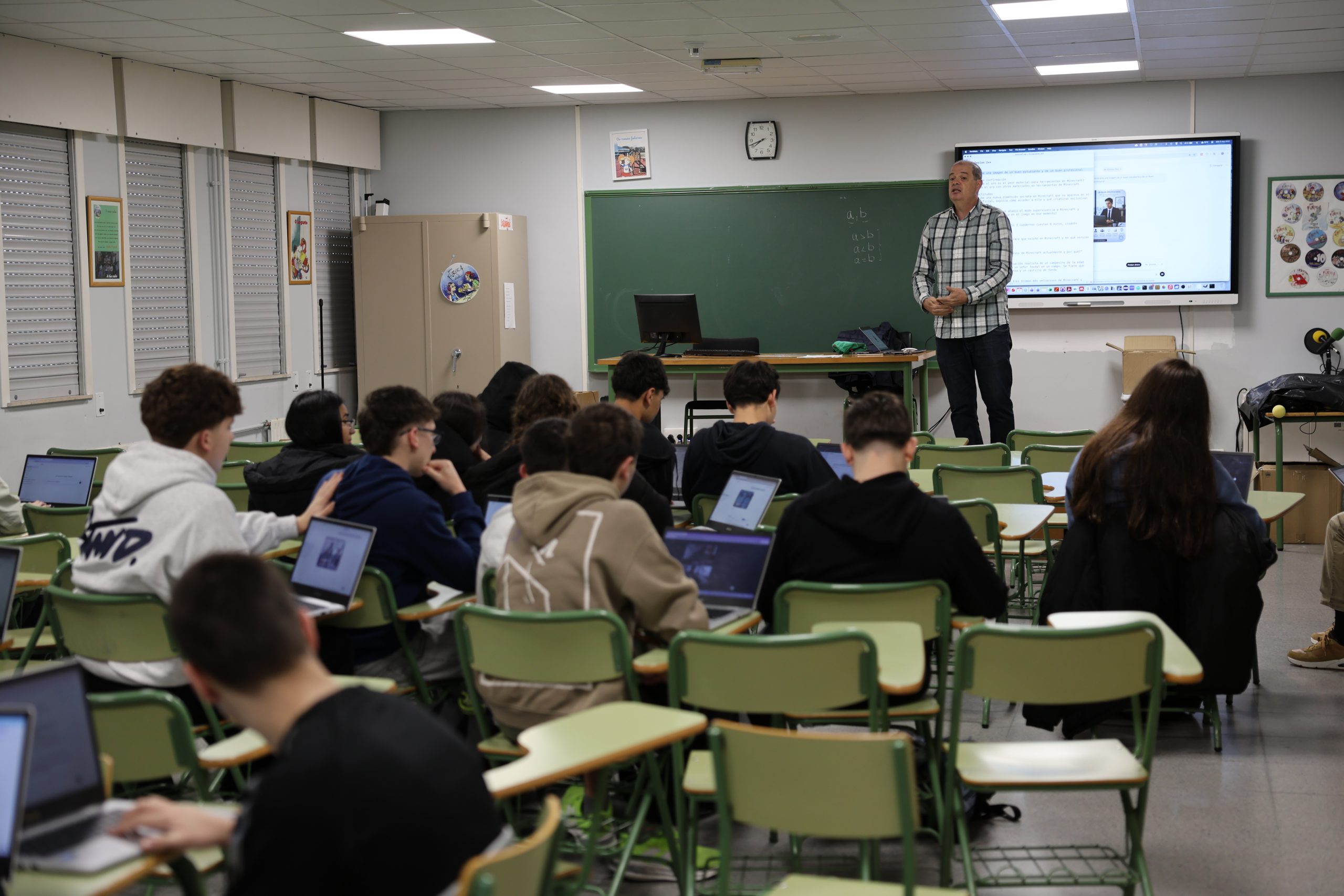
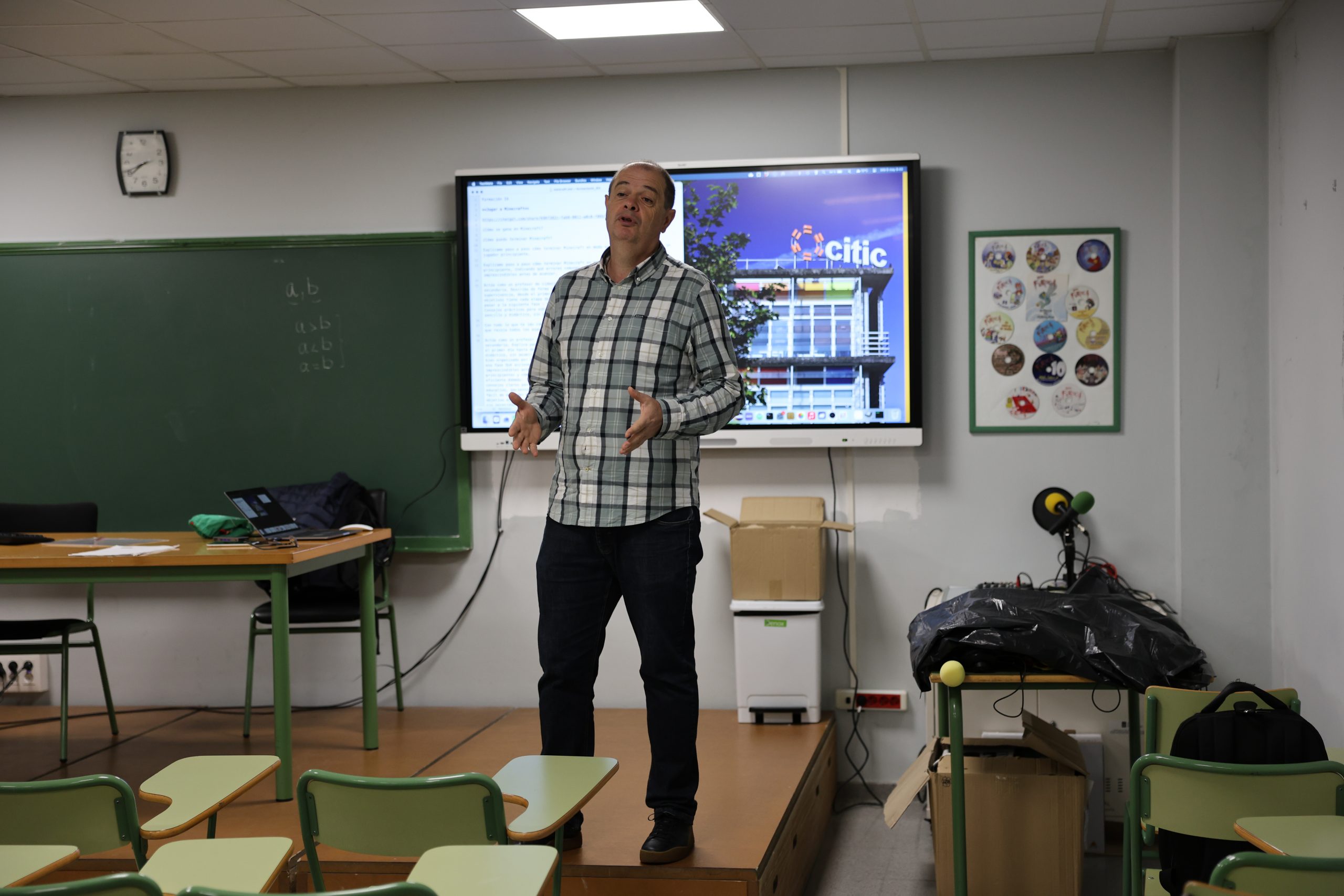
The student body was already familiar with artificial intelligence long before it was officially introduced into the classroom as part of the curriculum. The first edition of the generative artificial intelligence literacy programme, launched by the Provincial Council of A Coruña in collaboration with the CITIC at the Universidade da Coruña, has now come to an end following its implementation between February and May in 20 secondary schools across the province. An educational experience that has not introduced an unknown technology, but has sought to explain a use that was already commonplace.
The programme has been run in schools with very different contexts: from urban secondary schools such as IES Agra do Orzán and IES Elviña in the city of A Coruña, to schools in rural and coastal areas such as Muros, Ortigueira, Vimianzo or Ribeira. Schools in Ferrol, Betanzos, Carballo, Culleredo, Oleiros, Fene, Santiago de Compostela and Arteixo have also taken part, where the last of these sessions took place today. This diverse educational network has made it possible to bring the training to virtually the entire province.
The starting point for the programme was not a lack of exposure to artificial intelligence, but rather its widespread use among students. A technological normalisation that, however, was not always accompanied by understanding.
“Our goal was to engage directly with students to train them in the proper use of generative AI, with a particular focus on ethical and legal considerations. We have fully achieved that objective,” explains CITIC researcher Francisco Bellas. The team’s overall assessment is that the programme has brought about the desired change: a shift from the automatic use of AI tools to a more critical and informed approach.
One of the most significant lessons has been seeing in the classroom that artificial intelligence is not infallible. The models generate coherent and plausible responses, but they are not always correct. They can make mistakes, omit information or reproduce biases.
This discovery has had an immediate effect on the students’ perception: AI ceases to be a source of authority and becomes a tool that requires verification and supervision. Critical thinking is reinforced as a key skill, not only for asking better questions, but to better interpret the answers.
Digital ethics, privacy and authorship
Beyond the technical aspects, the programme has focused on an area where there is a significant lack of awareness: digital ethics. Data protection, content authorship and the responsible use of information have been the most novel aspects for the students. This is how researcher María Suárez, who took part in sessions at IES As Insuas in Muros, has explained it.
The link to familiar experiences, such as the use of social media or the digital footprint, has helped to bring these concepts into the students’ everyday lives.
Teachers highlight that artificial intelligence is already part of many students’ study routines, even before any specific training. The Provincial Council’s programme with CITIC has served to make this use visible and provide it with context. In this sense, the initiative does not introduce new technology into the classroom, but rather reorganises an existing scenario, providing guidelines for its responsible use.
Following the same line of thought, another CITIC researcher who has taken part in the programme, Alejandro Romero, emphasises that the training has had not only a technical impact, but also an educational one in terms of digital citizenship. The programme has enabled students to “move from an intuitive use of artificial intelligence to a conscious, critical and responsible use”, particularly regarding issues related to privacy, authorship and the accuracy of information, he explains.
This approach ties in directly with the recommendations of international bodies such as UNESCO and the European Commission, that stress the need to integrate artificial intelligence literacy from an ethical, critical and people-centred perspective. Both institutions emphasise that it is not enough simply to know how to use these tools, rather it is essential to understand their social implications, their limitations and the associated risks, thereby promoting an informed and responsible digital citizenship.
Equal access to education and training across the region
The Councillor for Education and Youth at the Provincial Council of A Coruña, Yoya Neira, points out that the programme stems from a clear need identified among students: “Many young people already use artificial intelligence in their daily lives, but they do not always have the necessary training to understand how it works or to use it critically and responsibly.”
In this regard, he emphasises that the aim has been “to provide rigorous, practical and ethical training in generative artificial intelligence, ensuring that all students, regardless of their school or background, have the same learning opportunities”.
Neira stresses that the programme also reflects a principle of regional equity: “We do not want access to this kind of knowledge to depend on where one studies or on the resources available at the school.”
Regarding the initiative’s impact, the councillor notes that the feedback has been “very positive”, as students “have not only learnt about AI tools, but have also developed a more critical perspective on their use, particularly regarding privacy, information verification and content authorship”.
Looking ahead, the Provincial Council considers it essential to continue the programme. “Artificial intelligence will continue to evolve and the education system needs constant assistance. Our commitment is to continue promoting training that helps students use these tools with judgement, responsibility and critical thinking,” concludes Neira.
About the CITIC
The CITIC is an investigation centre that boosts progress and excellency at R&D&I applied to ICT, created in 2008 by the Universidade da Coruña (UDC). The scientific activity is structured around four main areas of research: Artificial Intelligence, Data Science and Engineering; High-Performance Computing; and Smart Services and Networks, as well as a research area transversal to all others: Cybersecurity.
The CITIC is credited as a Centre of Excellence and a member of the CIGUS Network for the 2024-2027 period, which guarantees the quality and impact of its research. The endorsement, structure and improvement of the CITIC is cofinanced by the Xunta de Galicia and 60% by the European Union within the framework of the Operative Program FEDER Galicia 2021-2027, with the goal of promoting “a more intelligent Europe: An innovative and intelligent economic transformation” (ED431G 2023/01).