The CITIC and the Provincial Council of A Coruña take AI to Secondary Education and Baccalaureate classrooms
- The initiative will take generative AI to 20 high schools across the region over the school year 2025-2026.
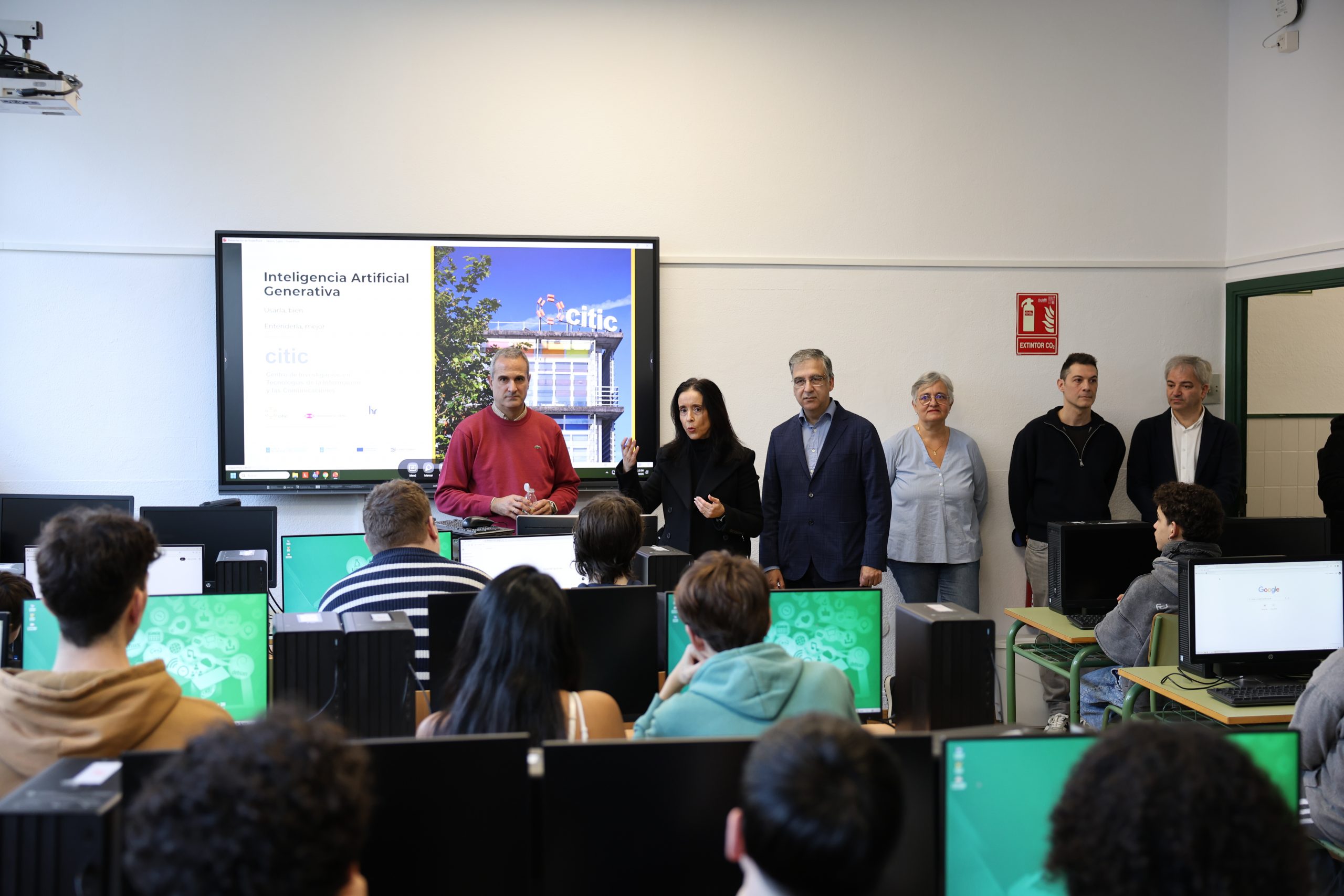
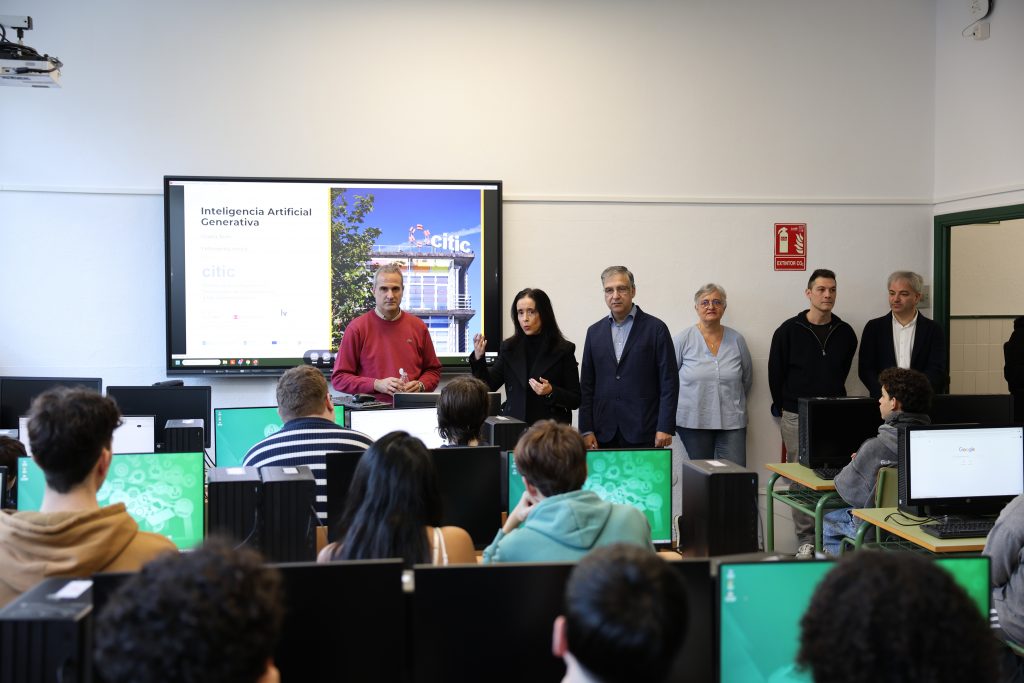
The CITIC of the Universidade da Coruña continues this Monday 23rd of February at the IES Agra del Orzán the educational program on generative artificial intelligence aimed at the student body on the 10th and 11th Grades, which takes place under the agreement signed between the Provincial Council of A Coruña and with the CITIC Foundation.
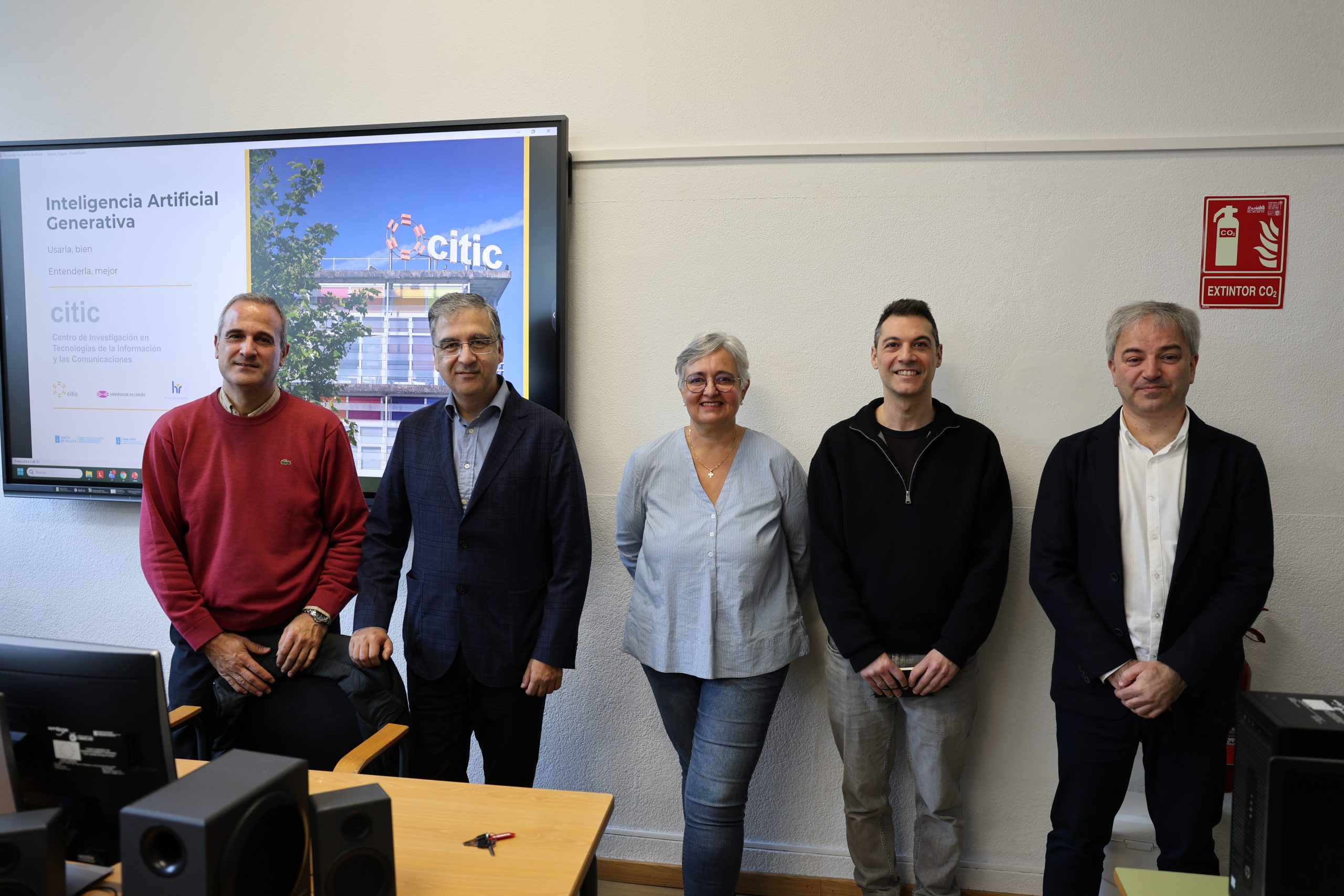
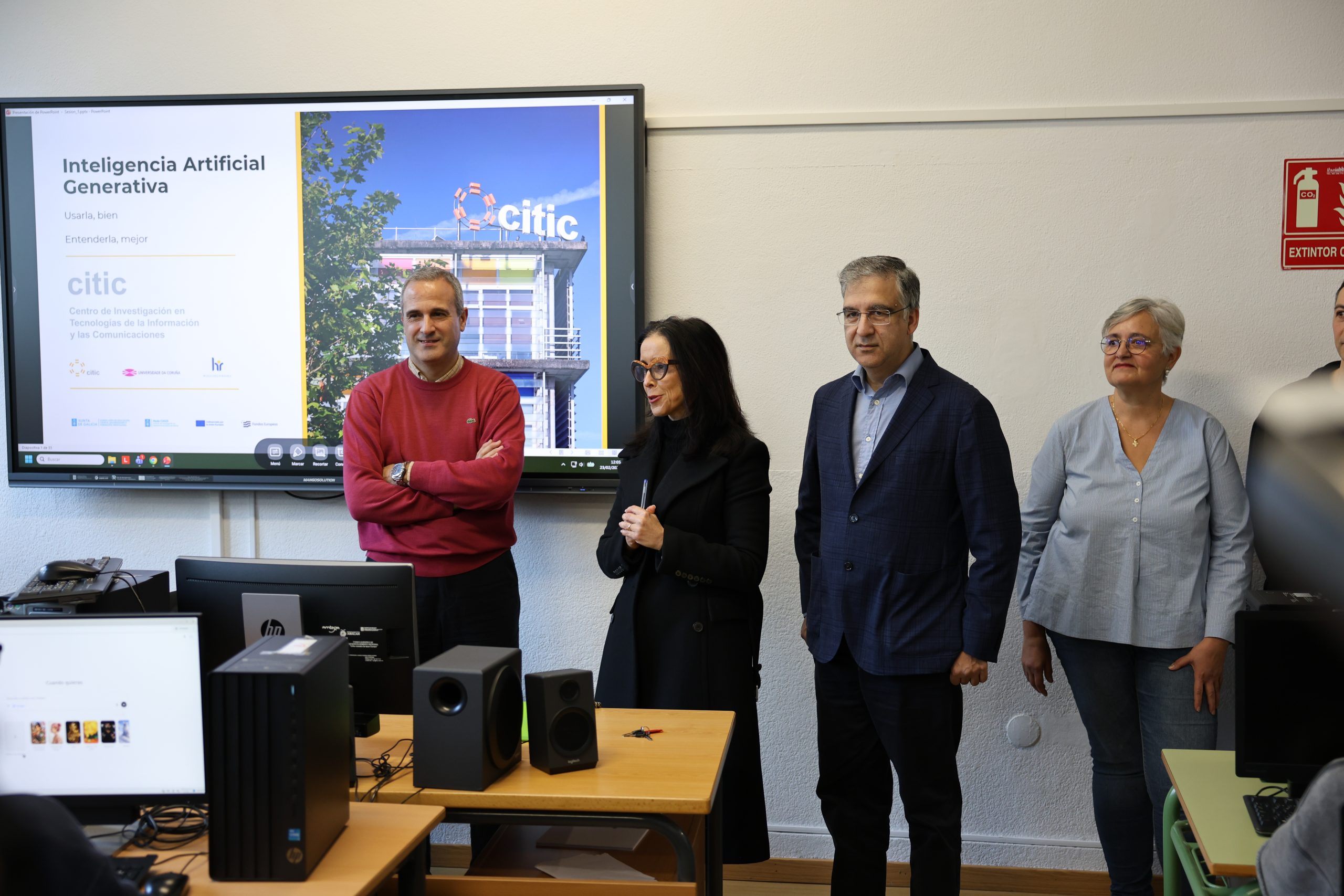
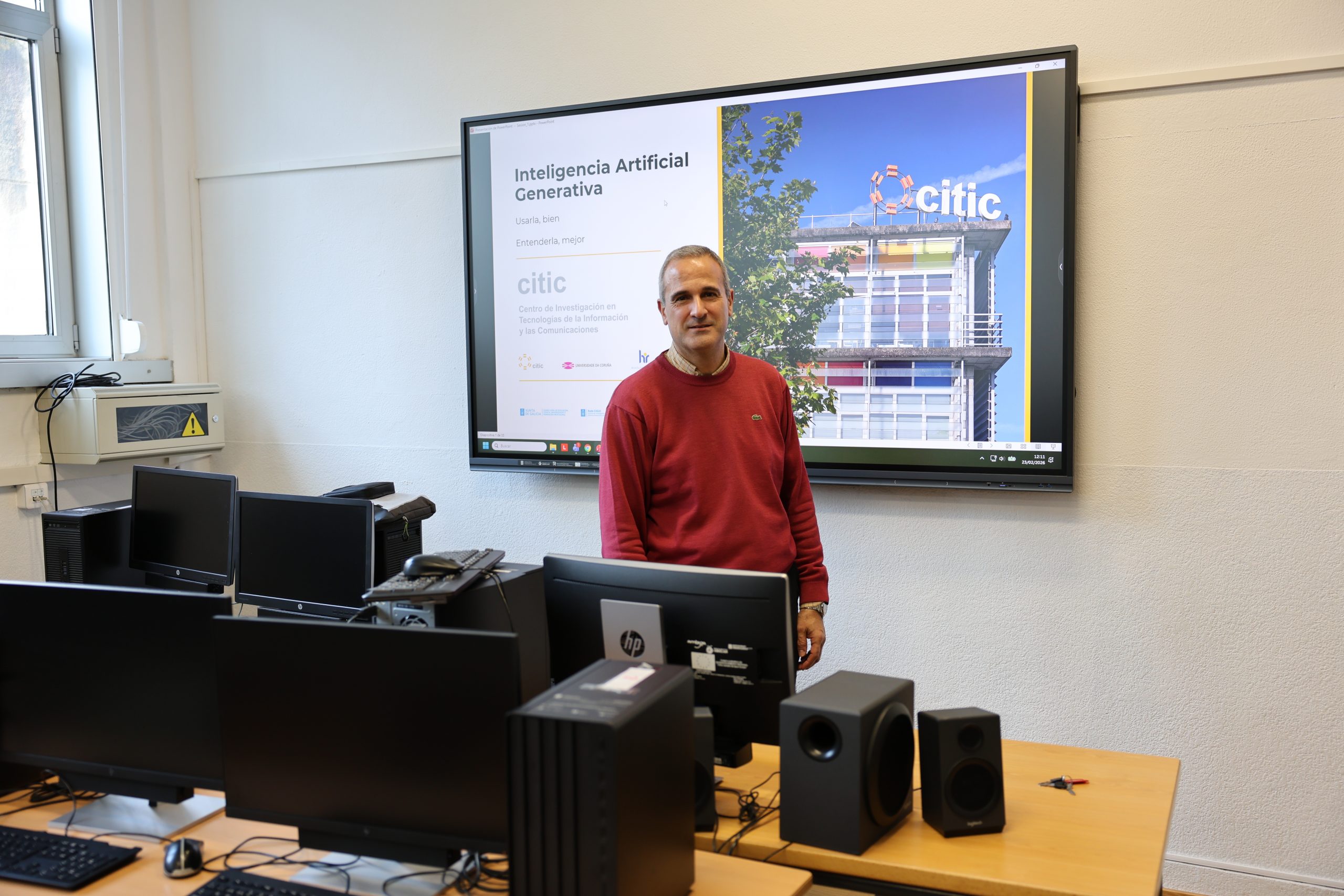
Today’s session, the second one of the two that were planned for this high school, was taught by the researcher Javier Andrade Garda. On the side of the CITIC Foundation, the recently invested vice director, Eduardo Mosqueira, and Javier Pereira also assisted. In representation of the Provincial Council of A Coruña came the current Counsellor of Education, Yoya Neira.
Education to understand and use AI with criteria
The advancement of artificial intelligence over the past two decades, boosted by the increase in computational capacity and mass access to digitalised data, was noticeable. However, the appearance of ChatGPT in the year 2022 marked an inflexion point, turning generative AI into a tool of general mass use.
Its capacities -from text generation to image, music and video creation- opened important opportunities on educational, professional and creative fields, but they also highlighted self-evident risks, such as misinformation, algorithmic biases, content manipulation and impact on choice making. In this context, education becomes the main tool to both boosts the benefits of AI and minimise the damage it can cause.
International institutions such as UNESCO or the European Commission have already developed frames of reference on AI alphabetisation, underlining the specific need for education of the student body, both because of their vulnerability and because of the key role they will play in the future of the digital society.
A program based on the AILit European frame
The educational proposal of the CITIC is inspired by the recommendation of the AILit European frame, itself structured around three main axes: Knowledge, skills and attitudes for an efficient and responsible use of generative AI. The program boards four key points: Understand, use, manage and design AI.
The main objective is to provide a solid base for the students that allow them to understand what generative AI is, how it works and in what ways it is different than other AI systems, as well as ensuring they know basic technical concepts such as algorithms, data training or probabilistic content generation. A secondary objective is allowing them to use these tools in a practical, safe and critical way, both in the academic field and in their daily life, learning how to detect biases or mistakes on the results generated by automatic systems and reflecting on the ethical, legal, social and environmental consequences of their usage. It is not simply about learning how to use the tools, but also about understanding how they work and the repercussions of their usage, promoting autonomy, critical thinking and responsibility.
The contents of the program are structured around two sessions of two hours in each school. During the first session, which has already taken place at the IES Agra del Orzán, the main subject was an introduction to artificial intelligence, explaining what it is and what it isn’t, its main fields and the foundations behind automatic learning and language models. The session also dealt with the usage of chatbots for text generation, such as ChatGPT, Gemini, Perplexity or HuggingChat, as well as prompt engineering, the importance of privacy, the usage of context and “reasoning” models. Furthermore, AI itself was analysed as a support tool for learning, paying attention to the detection of biases, mistakes and plagiarisms, as well as its impact on study processes, specifically on the evocation, elaboration and transfer of knowledge.
During the second session, which took place today, the focus was placed on generative AI applied to image, sound and video creation, as well as the responsible and legal use of these technologies. The session included image prompting techniques and copyright analysis, a comparison between tools like Adobe Firefly or Suno for musical creation, and an exploration of audio and video generation through different apps. Specific tools such as NotebookLM or ChatPDF were also showcased, and a debate around the responsible, usage, authorship, privacy and the European regulatory frame (including the future AI Law) was fostered.
Commitment to equality of digital opportunities
The program, which will be taken to a maximum of 20 educational institutions selected by the Provincial Counsil of A Coruña, will take place over the 2025-2026 school year in both urban and rural high schools of the region.
From the CITIC it was underlined that this action is part of their commitment to the transfer of knowledge to society, and to fostering technological vocations among young people.
This program is itself another step in the collaboration between the CITIC and the Provincial Counsil of A Coruña to provide technological knowledge to the education community and prepare the new generations for a digital context in constant transformation.